Top


Timeline
Tools
I noticed he forgot his phone and his schedule often. I realized I had ADD. I also found out my father had the same problem as me and maybe more serious than I had. According to some research, older people who have ADHD have an increased chance of getting Alzheimer's disease. So I thought maybe I could research to find a simple way to help my father or even see clear thoughts from the research. The idea is very simple; just want to help him remember things easily.
Research Objective:
To explore how to help older adults (60-80 years old) with ADHD improve memory problems, reduce plan changes, increase life stability, and reduce impact on family members.
Study subjects: Elderly people with similar ADHD.
Main problems: Forgetfulness, lack of planning, sudden changes in plans. Affects not only the individual but also family members.
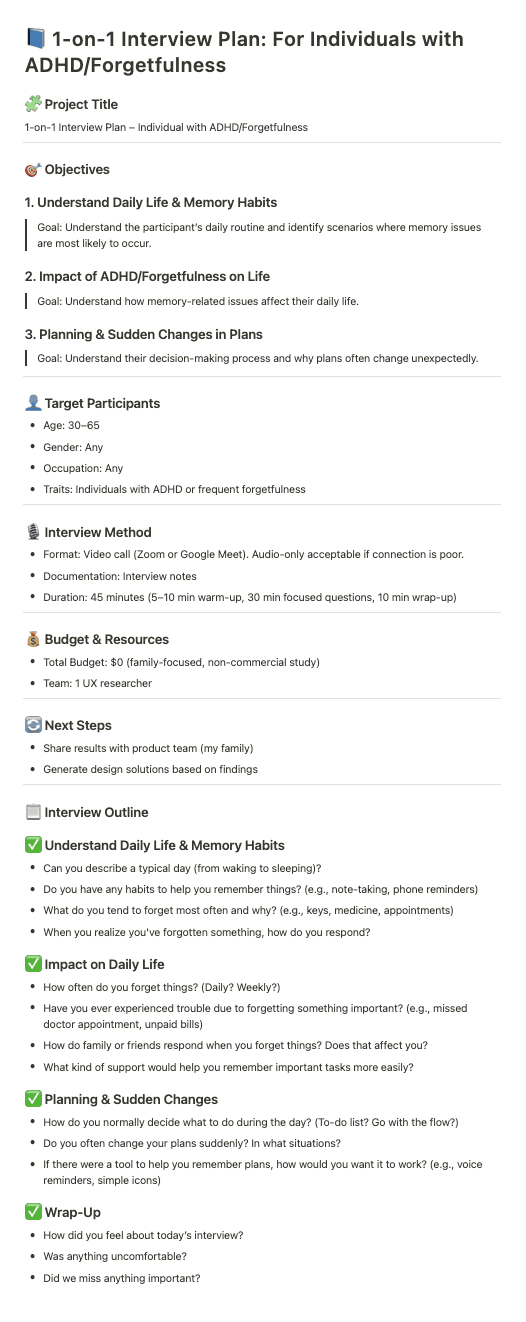
UX Research Plan Step 2: Design Interview Questions
Who to Interview?
Main user (ADHD patient) → Dad
Goal: To understand his behavior patterns, feelings, and what he thinks are the problems at the moment
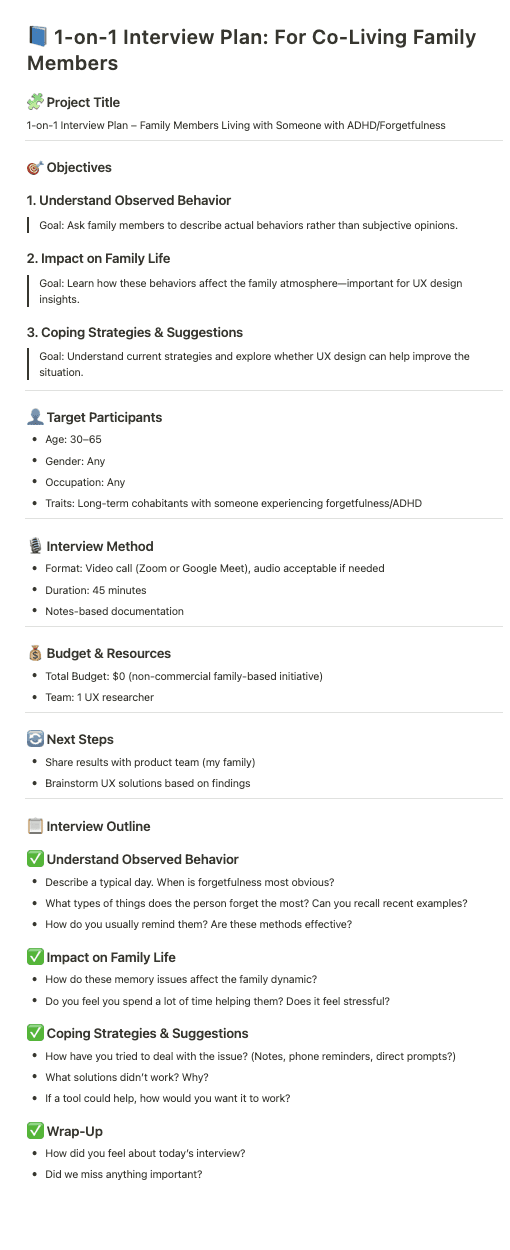
Secondary influencers (people you live with)** → family members
Goal: Understand how his behavior affects the people around him and how his family copes
Why interview family members?
- The ADHD patient himself may not be able to accurately describe his own problems (he may not be aware of the impact of his behavior).
- Family members can provide more objective observations (e.g., “He always forgets to bring his keys”, “He often cancels plans suddenly”).
User Research – Interviews with My Father & Family
(Understanding Forgetfulness and Daily Routines in an Elderly ADHD Context)
1-on-1 Interview Plan
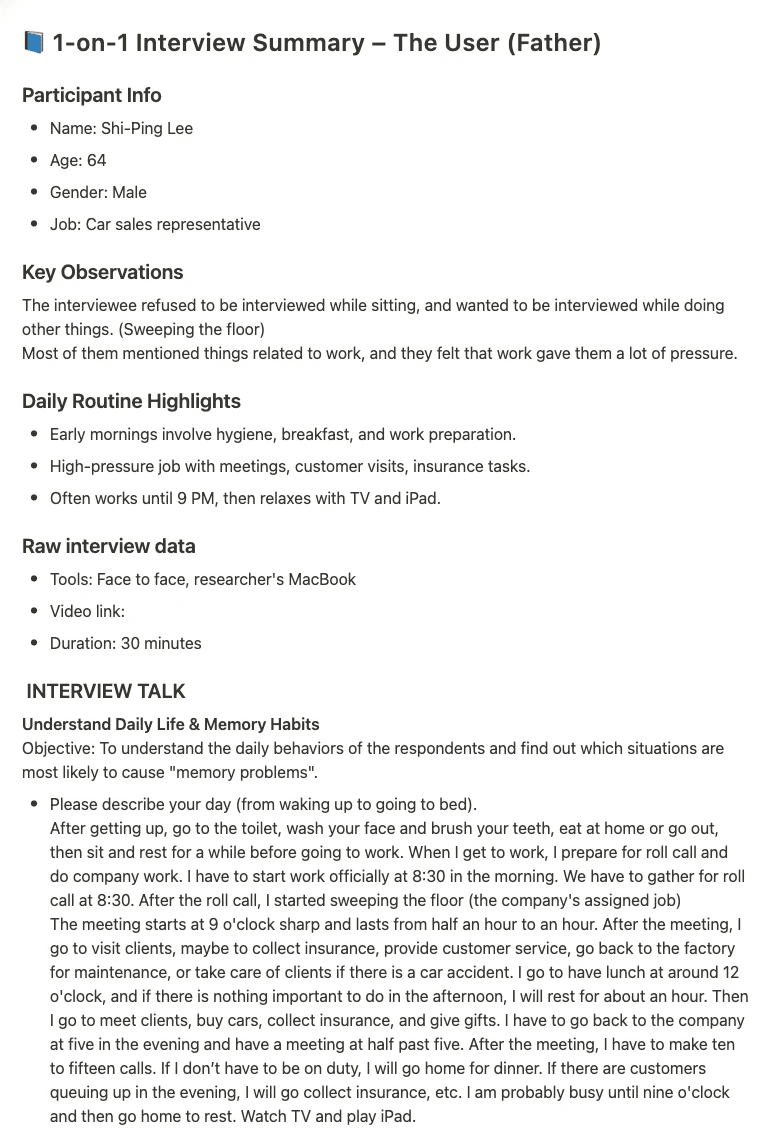
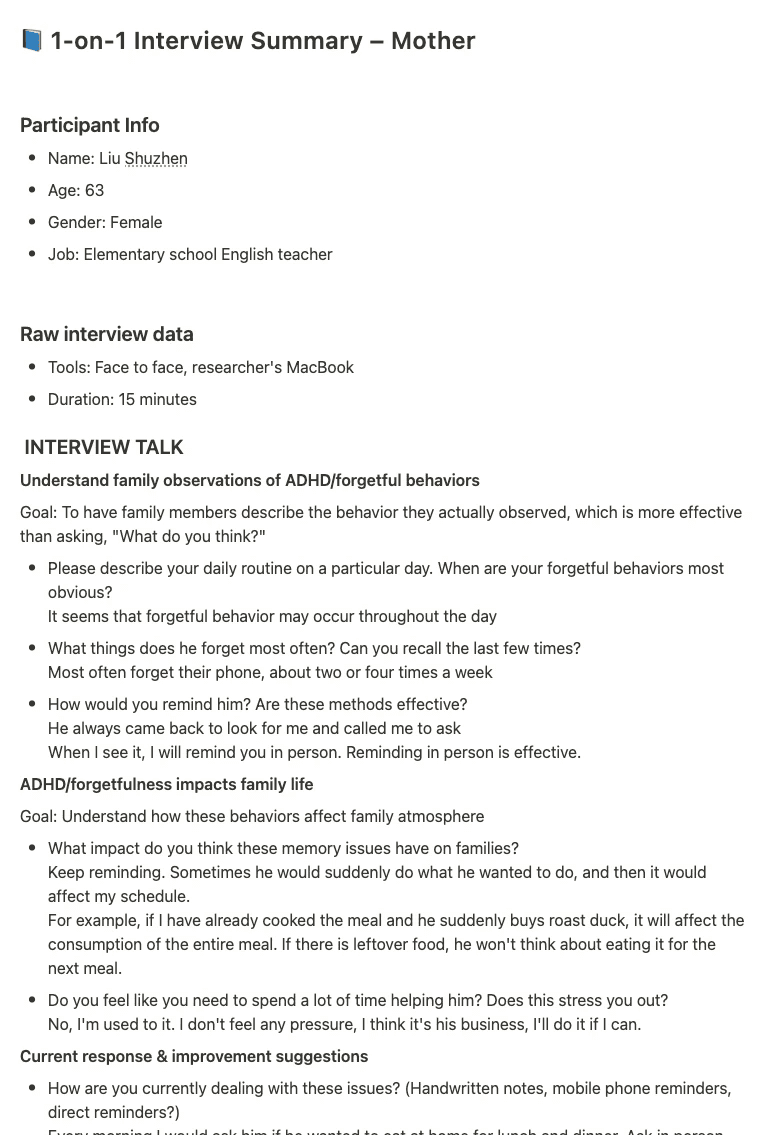
1-on-1 Interview Summary
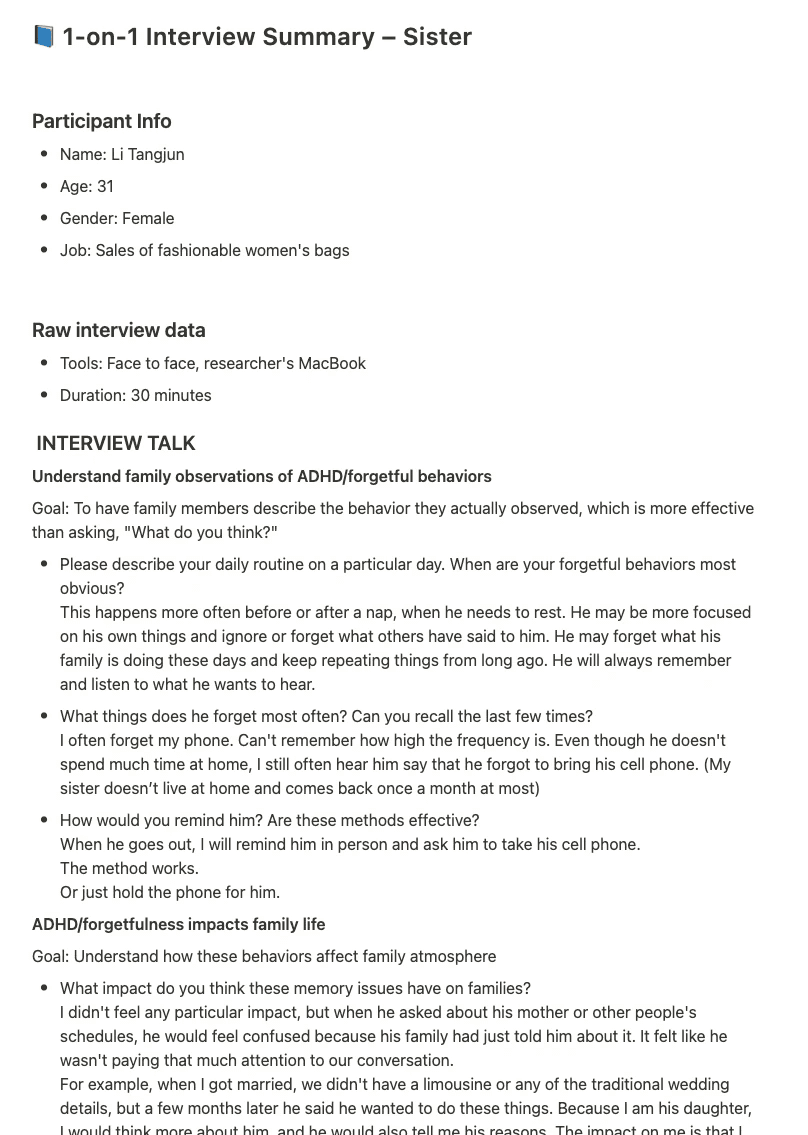
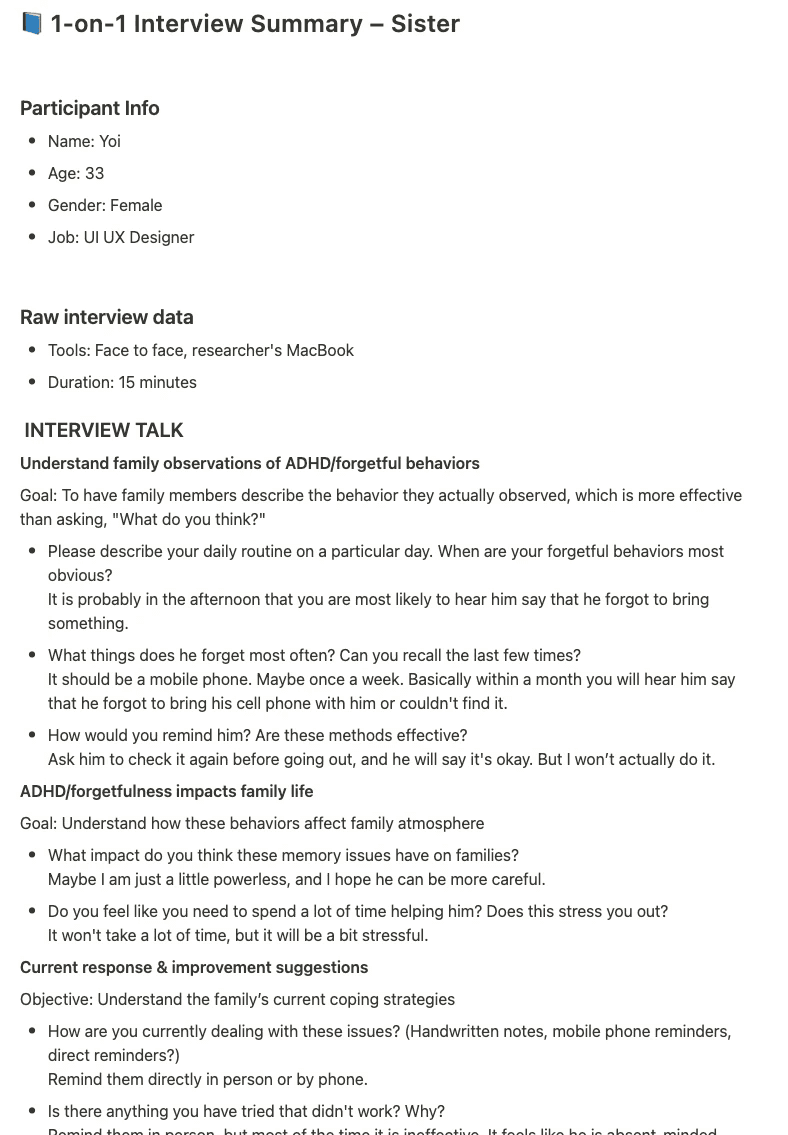
Me little notice from this interview experience:
Interestingly, my father mentioned his customers about 3 times or more. And he believes that retiring will solve all the problems. My mom shared a lot of information. At the end of the interview, it was a little like therapy; I felt fun because if you go deep a bit, people will like to share more than you expect.
1-on-1 interview: research report
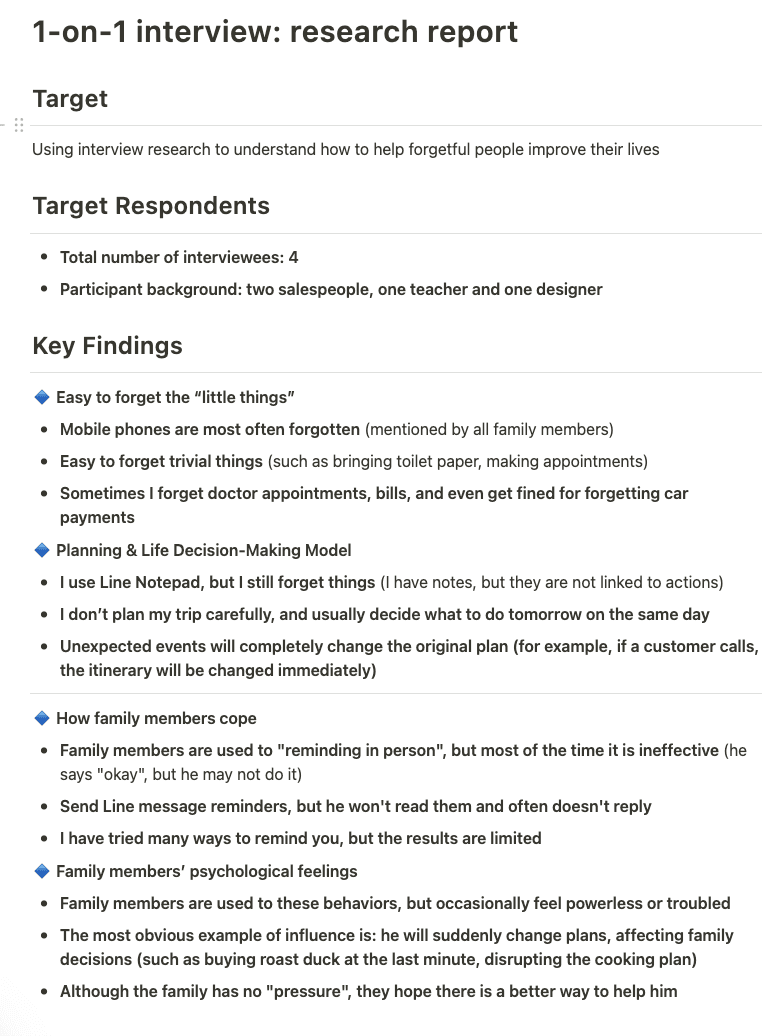
From the results, I found out some key points:
Easy to forget the "little things."
1. Mobile phones are often forgotten (mentioned by all family members)
2. It is easy to forget small things, such as bringing toilet paper and making appointments.
3. Sometimes he forgets doctor appointments and he deadline to pay fills, and he even gets fined for forgetting car payments.Planning & Life Decision-Making Model
1. The user uses a Line to make a note but still forgets things.
2. Users don't plan their daily schedules carefully and usually decide what to do on the day begins.
3. Unexpected events will completely change the original plan. For example, the itinerary will be changed immediately if a customer calls.
How family members interact with him.
1. Family members are used to "reminding in person," but Mitis is often ineffective(he says ok, but he may not do it)
2. The family will send Line messages to remind him, but he won't read them and often doesn't reply.
3. Family has tried many ways to remind you, but the results are limited.Family members' psychological feelings
1. Family members are used to this behavior but occasionally feel powerless.
2. The most obvious example of influence is that it will suddenly change plans, affecting family decisions, such as buying roast duck at the last minute and disrupting the cooking plan.
3. Although the family has no "pressure," they hope there is a better way to help him.
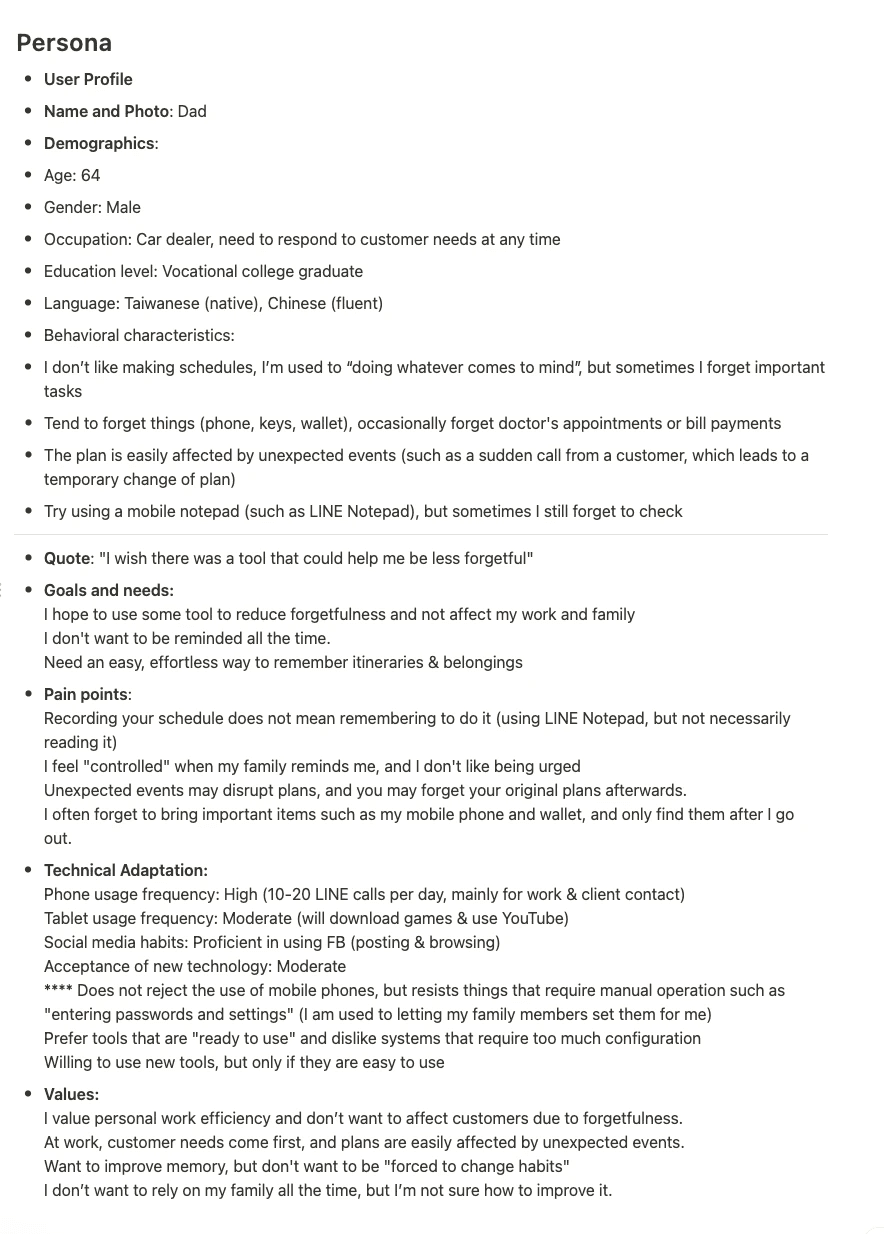
From the interview result, I made the persona and user journey map, and use those conclusion to start the competitive research direction in the reminder and schedule plan.
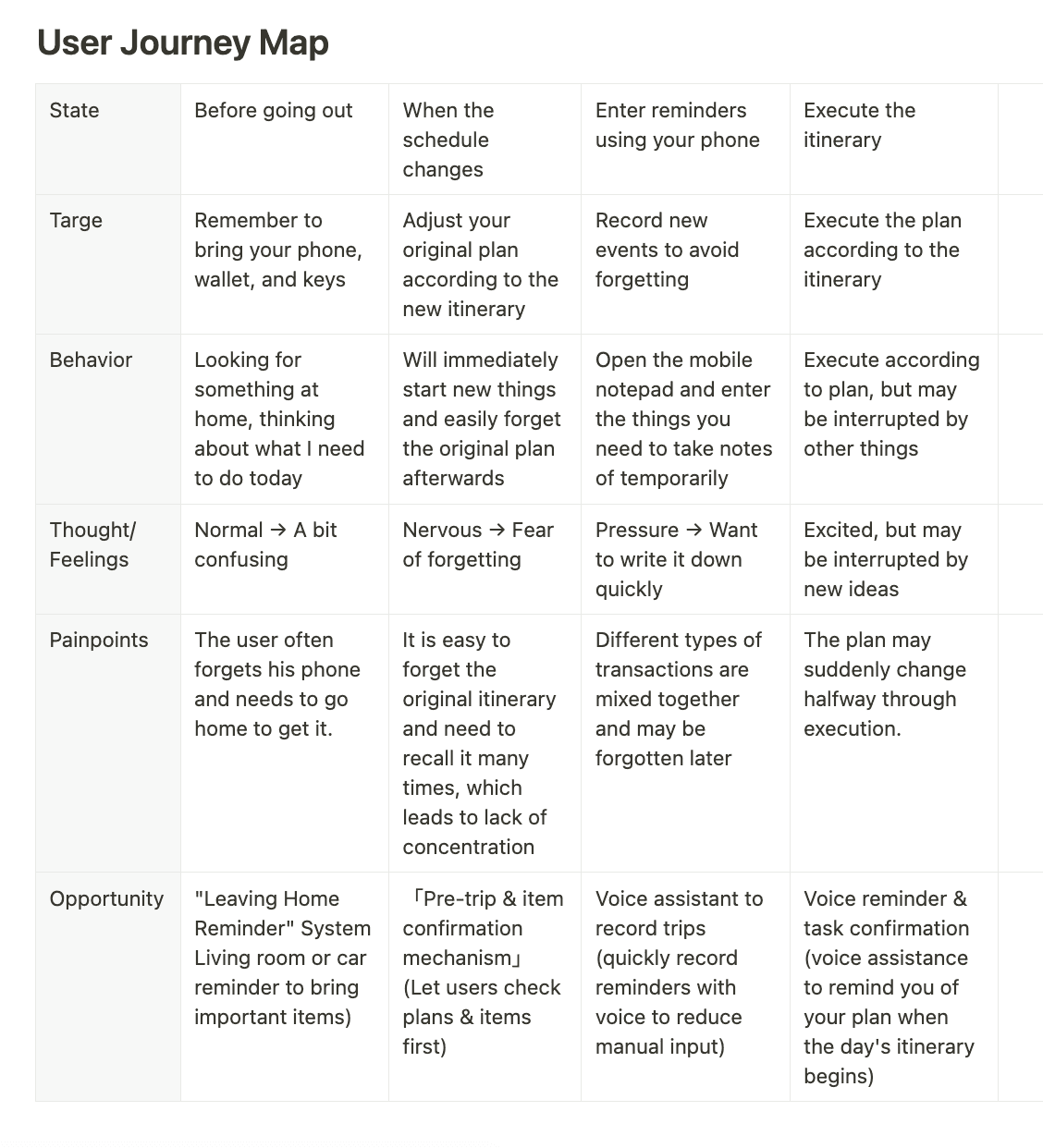
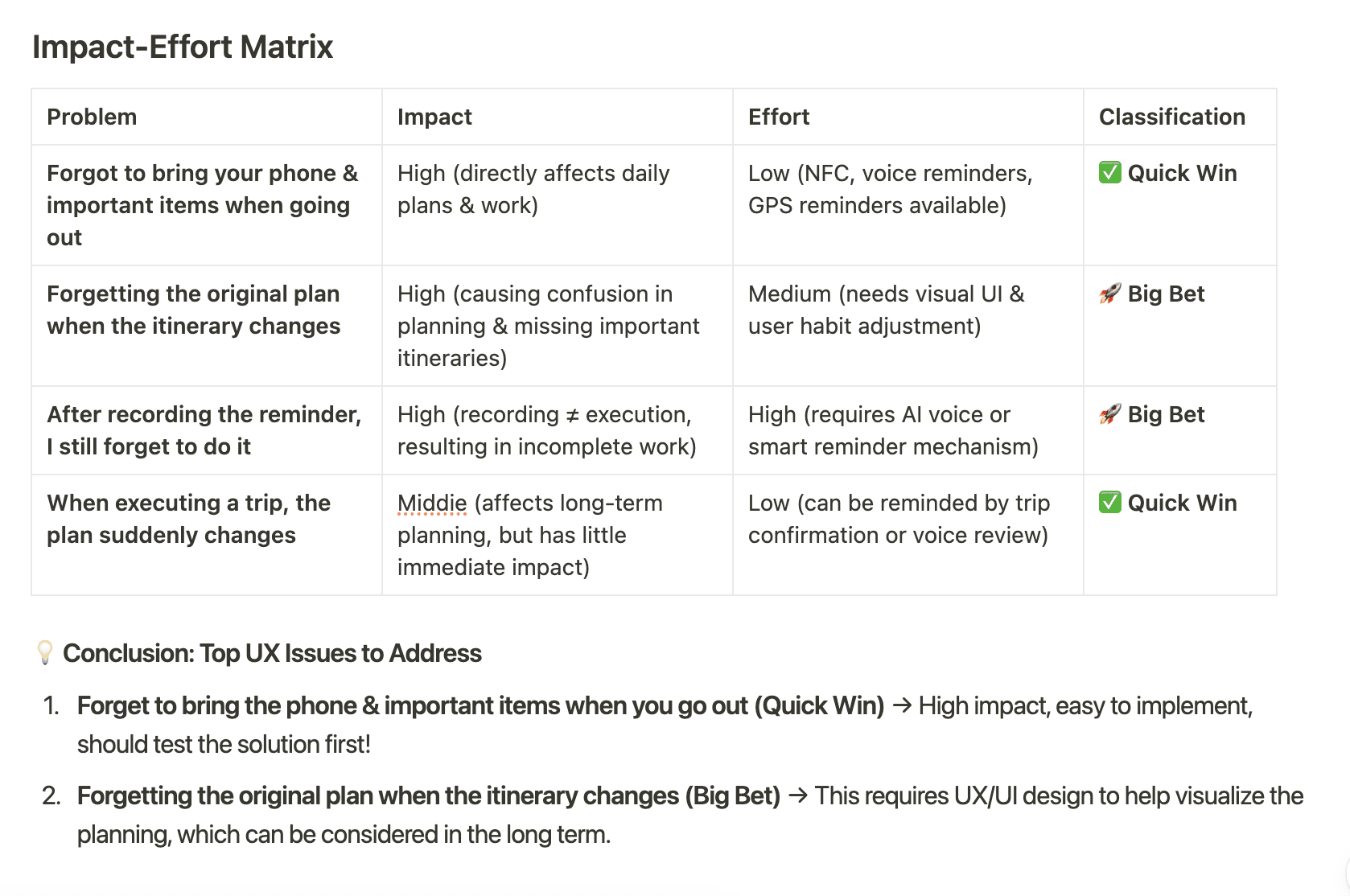
After I had done this user journey map, I figured that I document all the behaviors, and I don't know which problem is the most important, haha. So, I made the Impact-Effort Matrix to help me see clearly which problem I need to solve first.
Me little notice from this interview experience:
Interestingly, my father mentioned his customers about 3 times or more. And he believes that retiring will solve all the problems. My mom shared a lot of information. At the end of the interview, it was a little like therapy; I felt fun because if you go deep a bit, people will like to share more than you expect.
1-on-1 interview: research report
From the results, I found out some key points:
Easy to forget the "little things."
1. Mobile phones are often forgotten (mentioned by all family members)
2. It is easy to forget small things, such as bringing toilet paper and making appointments.
3. Sometimes he forgets doctor appointments and he deadline to pay fills, and he even gets fined for forgetting car payments.Planning & Life Decision-Making Model
1. The user uses a Line to make a note but still forgets things.
2. Users don't plan their daily schedules carefully and usually decide what to do on the day begins.
3. Unexpected events will completely change the original plan. For example, the itinerary will be changed immediately if a customer calls.
How family members interact with him.
1. Family members are used to "reminding in person," but Mitis is often ineffective(he says ok, but he may not do it)
2. The family will send Line messages to remind him, but he won't read them and often doesn't reply.
3. Family has tried many ways to remind you, but the results are limited.Family members' psychological feelings
1. Family members are used to this behavior but occasionally feel powerless.
2. The most obvious example of influence is that it will suddenly change plans, affecting family decisions, such as buying roast duck at the last minute and disrupting the cooking plan.
3. Although the family has no "pressure," they hope there is a better way to help him.
View All Case Studies